
What is ecosystem condition, why does it matter, and what can you do about it?
Increasingly, companies recognise the need to understand and act on issues relating to nature and biodiversity. Most depend on healthy ecosystems for their businesses to function and have significant impacts to address. Crucially, paying attention to nature and biodiversity now is an investment in a company’s future resilience.
Many of these impacts and dependencies are embedded in supply chains, and require pragmatic approaches to measure, understand and address them. Measurement gives insights into the scale of their impacts and enables companies to track progress as they implement solutions.
At 3Keel, we recognise and help clients with the thorny issue of measuring ecosystem condition within value chains. Companies face a growing expectation to include this within their monitoring frameworks, as it is an essential component of understanding ecosystem health and the overall state of biodiversity.
This article explains what the issues are, how to unravel the complex layers involved, and outlines sensible approaches for anyone getting started.
What is Ecosystem Condition?
Let’s start with the most obvious question. What are we talking about? Ecosystem condition describes the overall quality of an ecosystem measured in terms of its biotic (living) and abiotic (physical rather than biological) characteristics. – Measuring ecosystem condition: A primer for business ( Align Project, 2023). The purpose of measuring ecosystem condition is normally to show an improvement in the condition thanks to actions that a company is taking.
It’s complex. And urgent.
This is a technically complex area of work. Current guiding frameworks from the Taskforce on Nature-Related Disclosure (TNFD) and the Nature Positive Initiative (NPI) are still in development and due to be finalised. So, it may be tempting to wait for these before starting to unravel what is needed. However, we believe that you need to act now, not later. For most companies, the majority of their impacts on nature lie in upstream supply chains. This means that suppliers will be heavily involved in taking practical steps to gather information. You need a fair process and timescale to engage with them.
Given these challenges, what are the most widely-accepted ways of understanding ecosystem condition? There are two potential approaches: estimation and measurement.
Start by doing what’s necessary: estimation
Several models and metrics exist, which can use company data on their activities to generate estimates for ecosystem condition. One of the more common metrics is the Mean Species Abundance or MSA metric. This measures ecosystem condition by comparing species abundance levels between hypothetical “pristine” ecosystems and the current land use type and intensity of a company’s activities, such as an intensive agricultural system. This comparison provides a percentage value that represents the remaining condition of your location in its current state compared to how it would be if left “completely natural”.
There are several pros and cons of estimating ecosystem condition values.
Pros:
- Requires less data/information from the company
- Can use existing information about company activities
- Less expensive, as doesn’t require direct data collection from areas of interest
Cons:
- Doesn’t provide a “true” ecosystem condition value
- Normally requires validation with measurement at a later stage
- Is much less responsive to actions you take, meaning it is harder to demonstrate positive change
Then do what’s possible: measurement
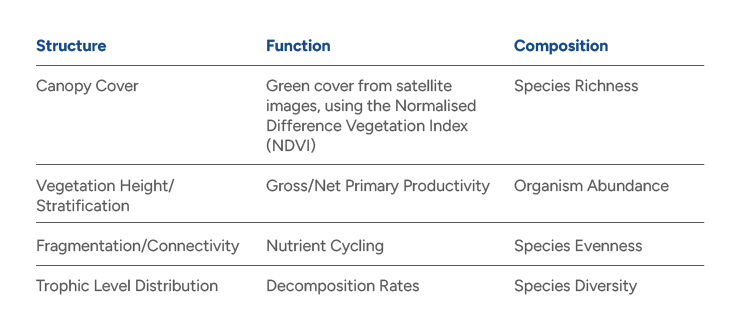
Measuring condition requires a few more steps but is essential to help confirm and realise the values generated from your estimates. This usually involves splitting the measurement into three main components:
- Structure – the biophysical properties of an ecosystem, including vegetation height, levels of fragmentation (the degree to which large continuous pieces of habitat have been broken up into smaller isolated patches through human development).
- Function – the processes that allow the ecosystem to function “normally”, such as water filtration or decomposition
- Composition – the species and their abundance levels
Each of these components can be described using a suite of different indicators. Some common ones are listed in the table below:
More information about the Normalised Difference Vegetation Index
More information about Net Primary Productivity
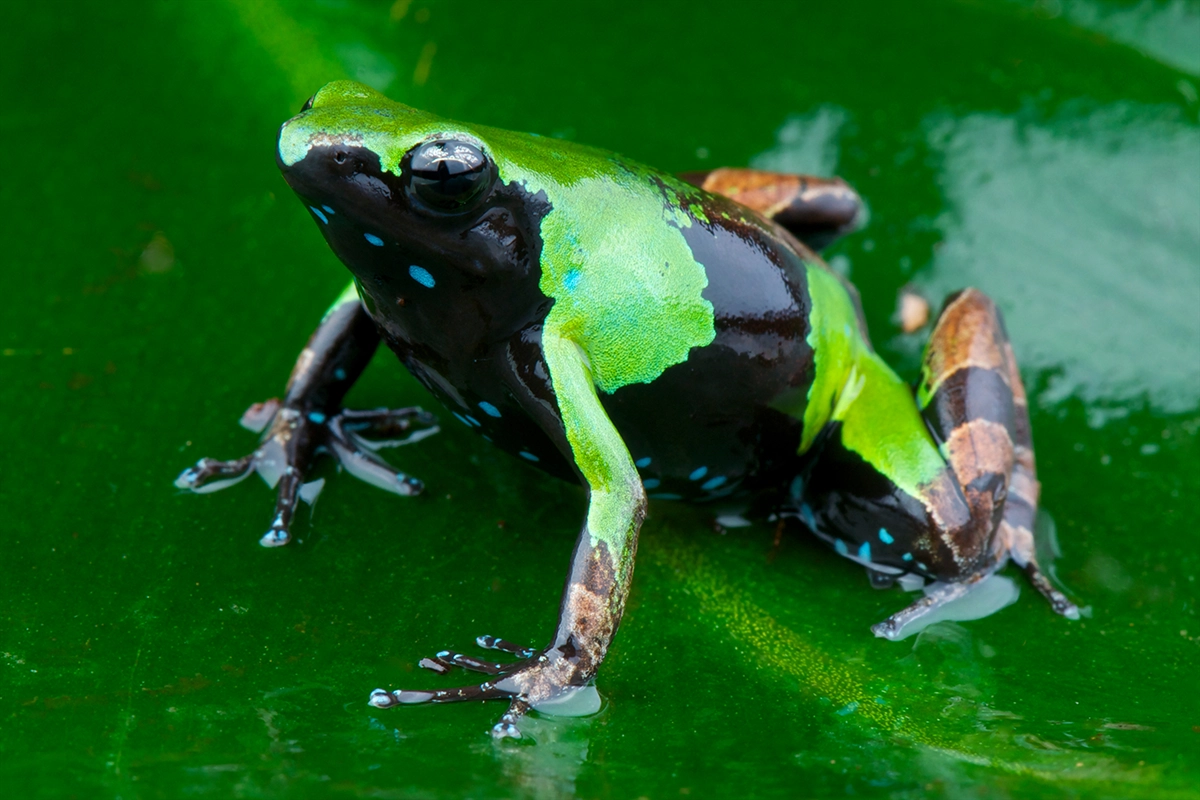
Guibe’s Mantella (Mantella nigricans)

Bearded Tit (Panurus biarmicus)